Curated by material ●○ inmaterial
About this playlist
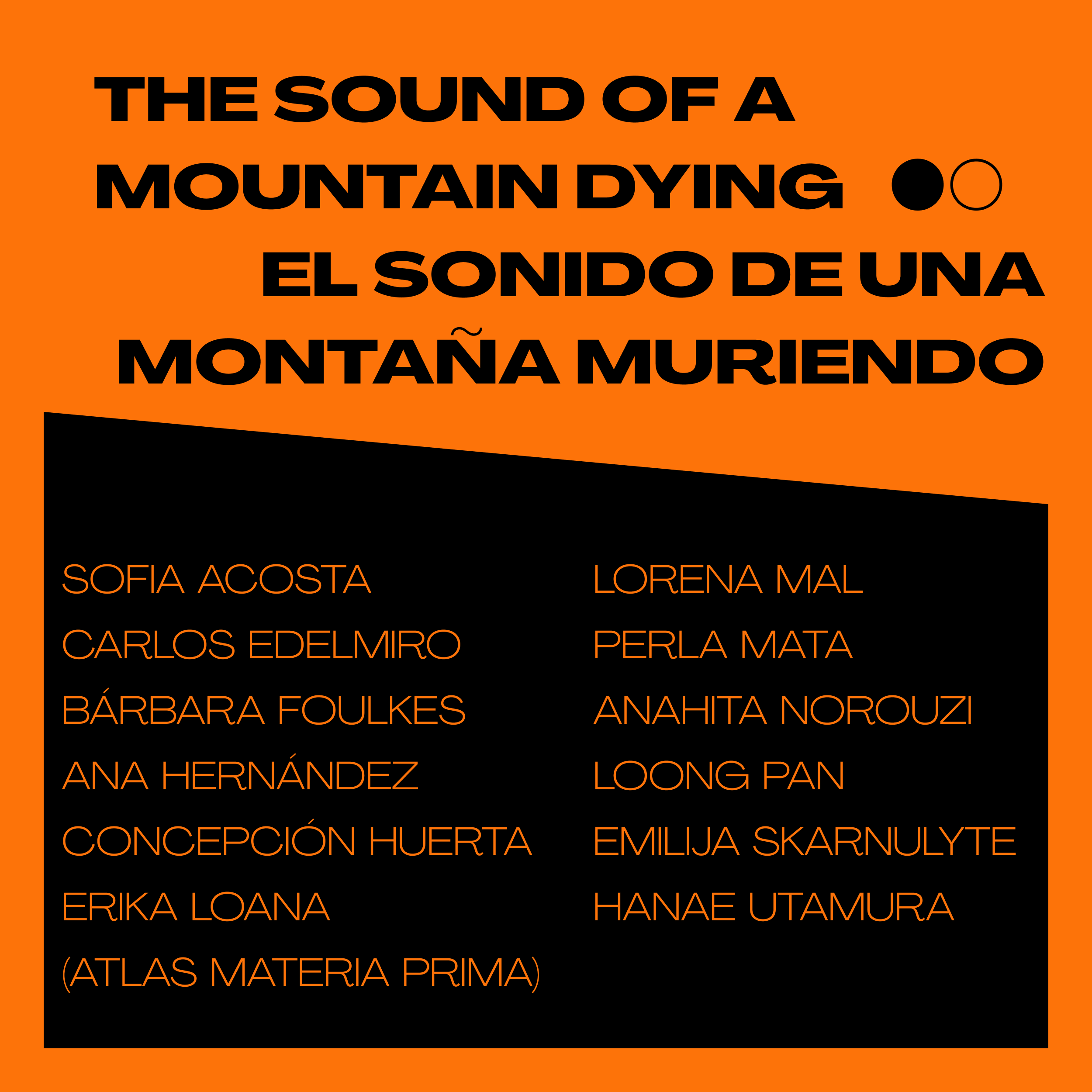
The Sound of a Mountain Dying is a soundscape that brings together the work of 12 artists who critically engage with diverse territories, material histories, and ecosystems across the planet, investigating deep time, climate and extraction.
For Playlist Curada, this first montage gathers a common soundscape and in doing so, a common ground. This new composition is shaped over time by the “sound tracks” of a series of films, sound sculptures, field recordings and improvisation sessions by the artists, bringing together a variety of geophonies that now now engage in dialogue with each other through their rumblings, blasts, and tides of a world listening to itself.
Sound research with works by Sofia Acosta, Carlos Edelmiro, Bárbara Foulkes, Ana Hernández, Concepción Huerta, Erika Loana (Atlas Materia Prima), Lorena Mal, Perla Mata, Anahita Norouzi, Loong Pan, Emilija Skarnulyte and Hanae Utamura.
Concept and sound montage: Lorena Mal
Sound mastering: Carlos Edelmiro
LOONG PAN
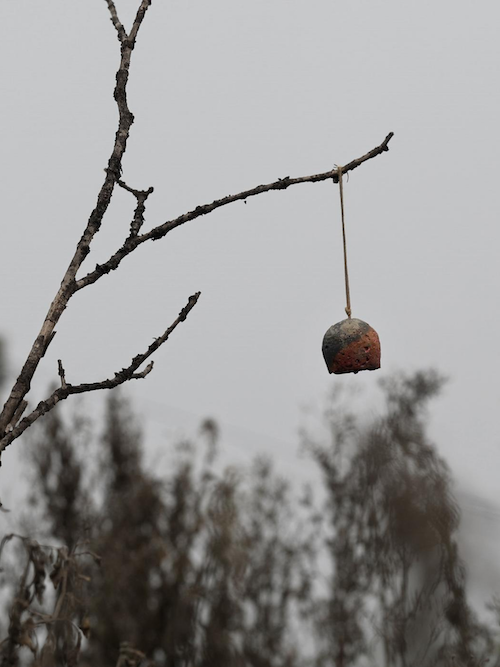
Windbell
This work involves extracting copper from plants in electronic waste-contaminated areas using "phytomining" technology (recycling metal from plants that accumulate metals). The extracted copper is then crafted into a small wind bell. When the wind blows, the distinct sound of metal colliding contrasts with the gentle "rustling" of plants, symbolizing alienation in the environment.
For almost three decades, coastal cities in China have been engaged in the profitable business of importing electronic waste from abroad. The excessive heaps of electronic waste create the "mines" of this era, with metallurgical practices dispersing heavy metals into the broader environment and leaving them to linger in our bodies through the biological chain. Might living organisms become the "mines" of the next era? Those heavy metals enriched in plants through metallurgy possess a stability that transcends human life, surpassing the dimensions of time.
Individuals may come and go, time keeps shifting, yet the wind bell crafted from metals in plants persists in the fields like an epitaph recounting a chapter of wild history with every gentle sound.
LORENA MAL
piedra partida
Piedra Partida Piedra Partida focuses on the category of fossil cinema, where deep geological time overlaps with human time. Following a journey from dawn to dusk, the video presents images of the ruins of Tepexi el Viejo, the Axamilpa River, the Manos de Bruja site, the Pie de Vaca paleontological zone, and the Tlayúa Quarry. The title refers both to the adjective used to describe areas rich in fossils, as is the case in this region, and to the Nahuatl word tepexi, which means “broken stone.” The text appearing in the video includes words in the N’giba language, whose speakers were called Popolocas in Nahuatl—a pejorative term that can be translated as “barbarians,” “stutterers,” or “people of a foreign tongue.” By referring to N’giba, the artist also approaches the memory of this territory—a memory that remains alive in the words of those who inhabit and name this place
Credits
Single-channel video with sound
18 min.
Direction, Production, and Editing:
Cinematography: Santiago Torres
Production Coordination and Data Management: Ollin Miranda
Sound Improvisation: Diego Espinosa
Sound Design: César González
Audio Mixing: Alejandro Díaz
Sound Editing: Mauricio Pérez
Post-Production Studio: Disruptiva
Location Sound Recording: Ariel Baca
Color Correction: Ollin Miranda
Texts: Chasen Thajni (Ulises Matamoros, Natalia Colmena, Alejandra Ascención, and Catalina Sillero) and Lorena Mal.
CARLOS EDELMIRO
Chichonal
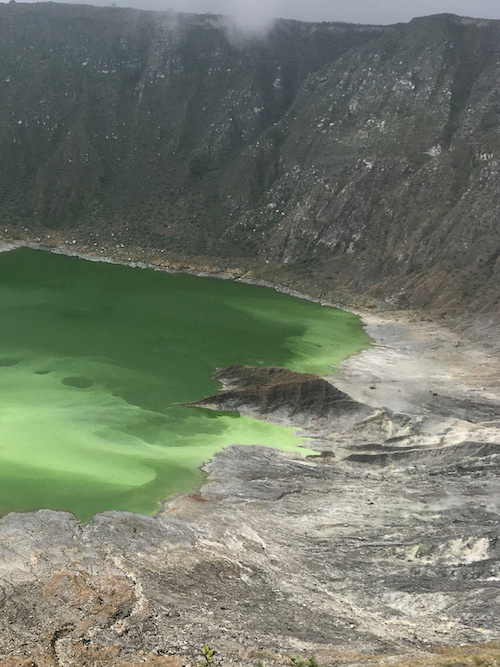
In 1982, the eruption of the Chichonal volcano buried more than a dozen Zoque communities. In 2018, I was part of the filming crew for the movie Pobo ‘Tzu’ and spent several days inside the Chichonal crater recording fumaroles, volcanic bubbles, and small gurgles of boiling water. I carried a shotgun microphone to capture the sound of steam and the emissions rising from the ground, as well as a hydrophone to record what was happening beneath the surface: bubbling and internal frictions. One had to tread carefully. Some rocks appeared solid, but the volcano’s heat had rendered them hollow or brittle. Before placing your full weight on them, you had to test whether the ground would hold. While recording, I sensed Chichonal as a vast body sleeping beneath the surface. Like Antero Vipunen, the sleeping giant of the Kalevala, it held within itself a mineral sound—deep, ancient, and almost magical.
EMILIJA SKARNULYTE
Burial
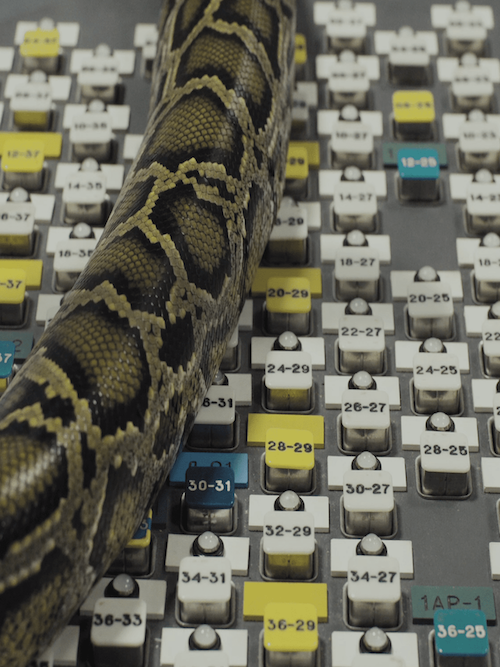
Burial invites viewer for an immersive sensorial trip into the unique and vast Ignalina Nuclear Power Plant (INPP) in Lithuania, now undergoing a decommissioning process. Cold War energy structures impact recent geopolitical processes and leave planetary threats over long periods of time. The project takes a geological approach – it reads things that compose this flat landscape as a stack of stratigraphic layers. Burial is an intertwined section through the current entanglement of identities, spatial practices, infrastructures and geological resources.
Director and Writer: Emilija Škarnulytė
Producers: Dagnė Vildžiūnaitė, Elisa Fernanda Pirir
Cinematographers: Eitvydas Doškus, Audrius Budrys, Adam Khalil, Emilija Škarnulytė
Composer: Gaute Barlindhaug
Editors: Mykolas Žukauskas, Darius Šilėnas
Sound Designer: Vytis Puronas
Colorist: Fredrik Harreschou
Production: Just a moment (LT), Mer Film (N)
Financiers: Creative Europe MEDIA (EU), Lithuanian Film Centre (LT), Vilnius City Municipality (LT), Nordnorsk Filmsenter (N), Frittord (N), Bergen fund (N)
ANAHITA NOROUZI
To Swallow the Sun
To Swallow the Sun explores the parallel and entangled histories of people, land, resources, and cultural property—histories shaped by extraction and erasure.
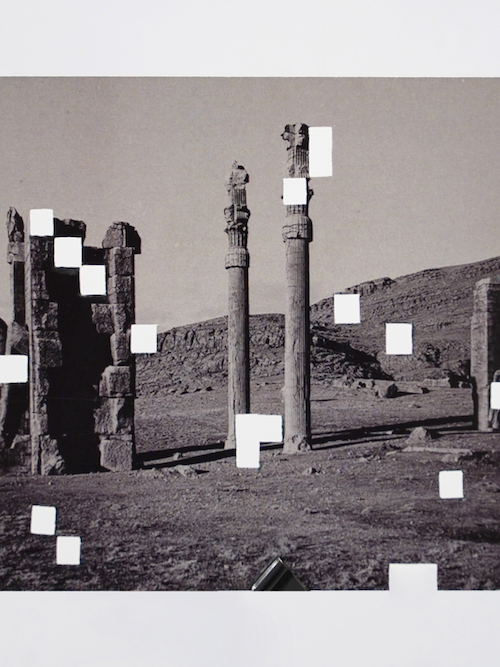
Blending speculation, historical fiction, and documentary, this 30-minute film essay investigates the role of British Petroleum in the colonial modernization of southwestern Iran—transforming a rural landscape into a colonial outpost through exploitation of its oil reserves. It explores how the landscape and built environment of the region were reshaped by extractive practices—both mineral and cultural—leaving behind a terrain marked by ruination, spiritual contamination, dispossession, and resistance. Tracing the entanglements of nature, politics, and gender under colonial domination, the film turns toward the future to imagine the region not only as a site of historical violence, but as a space for mythical and unfathomable possibilities.
SOFÍA ACOSTA / CONCEPCIÓN HUERTA
Onda
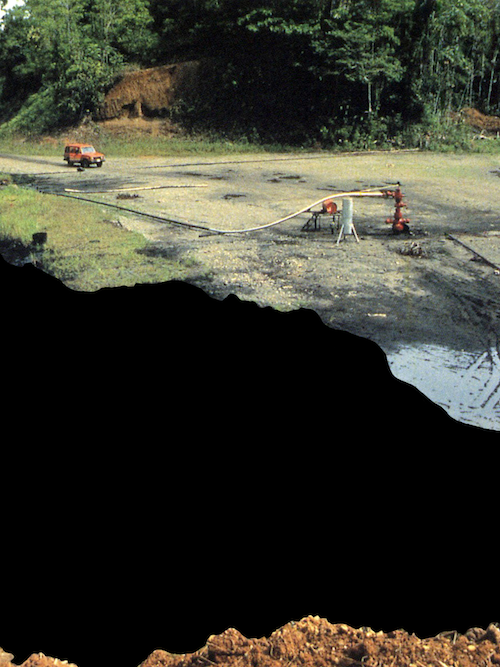
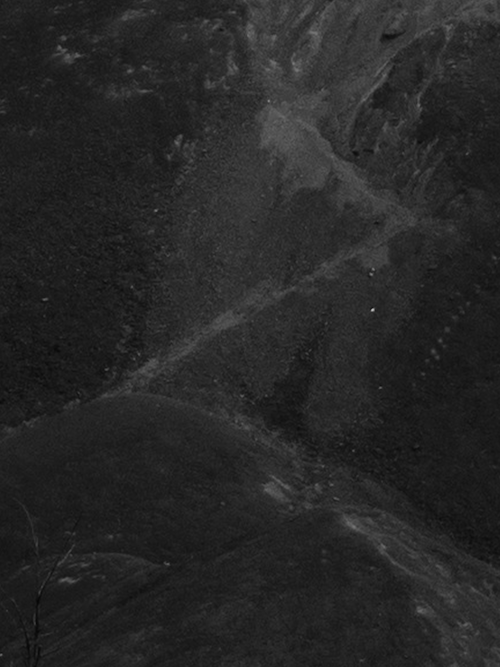
This work explores how radiations—those emitted by the sun onto the ionosphere and those generated by human and non-human life—pass through and transform HF radio systems in the Ecuadorian Amazon. Communication—whether human, geological, or spectral—is also a way of inhabiting time. It is not a linear time, but one that folds back on itself and returns. Like telepathic messages, it does not seek to constantly transmit and receive; or like nightmares, which emerge from the underground, insisting again and again. Within the spectrum, whether ghostly or radioelectric, I found that which persistently reappears. There, where listening becomes territory and territory becomes a possibility for relation. In this work, the wave, like dreams, returns, circles around, persists, and passes through the same point again. In doing so, it dismantles the notion that the only thing of value is that which moves forward. This circular temporality resonates with the cycles that endure despite the violent extraction, plunder, and dispossession imposed upon Amazonian territories that continue to resist. This sense of time reminds us that “if there is a future to imagine, it is ancestral, for it is already present in the here and now and in what exists around us—in the rivers, mountains, and trees that are our relatives” (Krenak, 12). The returning wave is not merely a technical phenomenon, but a way of listening, seeing, feeling, and perceiving that which persists, that which returns, or that which refuses to disappear.
PERLA MATA
Permanentemente en proceso
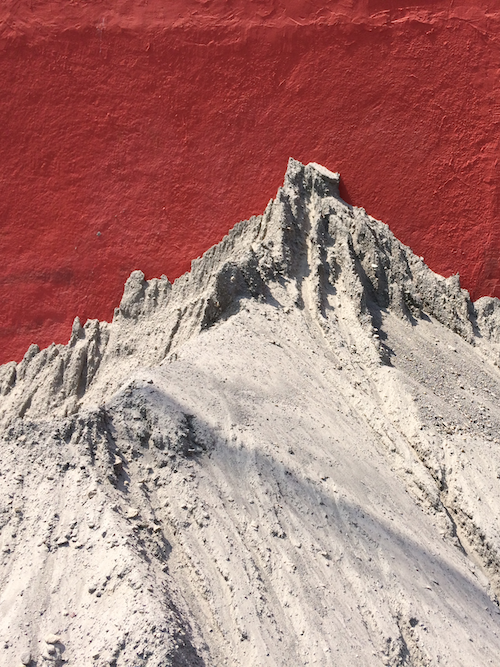
This work emerges from a sustained attentiveness to a metallurgical complex operating in a region historically linked to metallurgy, in Torreón, Coahuila, Mexico, where silver and other metals are refined. The focus lies on the residual matter discarded once the desirable—what is useful to industry—has been separated from the supposedly undesirable. One of the most visible manifestations of this industry’s operations is a mound of waste that remains in the territory and is locally known as Cerro Negro (Black Hill). This body, with its solid and seemingly static presence, also appears as dust particles that become incorporated into the surrounding environment, as fragments suspended in the air—multiple and volatile—or as gases dispersed through smokestacks. From this relationship, material that escapes the industry's systems of containment is collected, followed by the recovery of the technical data sheet for one of the solid waste products that are accumulated on site. The document records a chemical composition consisting of zinc (70%), iron (22%), silica (6%), and trace amounts of silver (2%). Based on these percentages, a sonic translation is developed that interprets each component according to its proportion by weight. The construction of the soundscape emerges both from the recovery of sound recordings associated with the industrial environment and from a speculative exercise that seeks to imagine how the processes suggested by the material’s own composition and physical properties might sound.
HANAE UTAMURA
Spring Water, Fault, Body
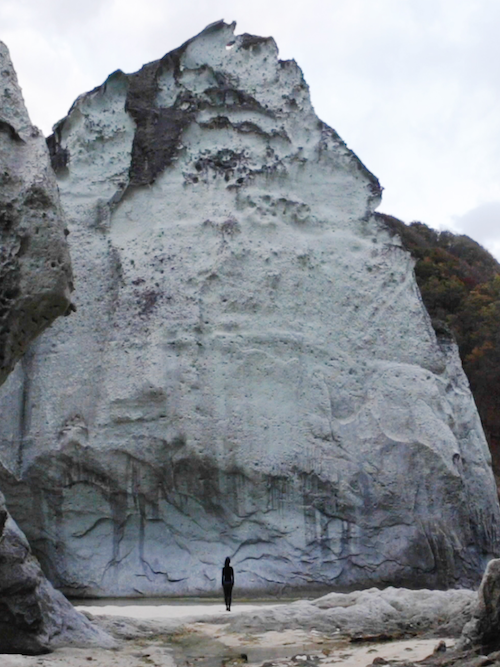
Hanae Utamura’s work “Spring Water, Fault, Body” (湧き⽔と断層と身体) is based on the memories of her father, a scientist who witnessed Japan’s postwar economic growth during the Cold War. The work addresses the conflict between humans and nature and how time influences this supposedly continuous relationship. Radiometric dating has been used to determine the age of substances on Earth. However, numerous nuclear weapons tests in the mid-20th century rendered this method obsolete, making it no longer possible to classify air collected after 1950 based on carbon content. Utamura compares this associated loss of a sense of time (that is, a before and after) in contemporary society to a geological fault. This condition, defined as a large crack in the Earth’s surface—a fault in the strict sense—is also understood in Japanese as a discrepancy between opinions and ways of thinking. “Spring Water, Fault, Body” (湧き水と断層と身体) decentrers the human perspective and suggests thinking about family in relation to existing ecosystems.
----- Gloria Aino Grzywatz
— Gloria Aino Grzywatz
"Spring Water, Fault, Body", 2021 single channel video with sound, 16min.3sec.
Filming Location: Aomori Contemporary Art Centre (ACAC), Aomori Hotoke-ga-ura seashore, The Submerged Forest in Dekijima seashore
Spring Water of Gudari Swamp Higashi Hakkouda Tashiro Highlands, Hokkaido Horonobe Underground Research Center.
Corporation: Aomori Contemporary Art Centre(ACAC), istyle Art and Sports Foundation, Squeaky Wheel's Workspace Residency, Participants of Performance and Workshop: Satoko Kawamura, Sonoko Shibata, Daisuke Sugiura, Miho Izumida
Workshop filmed by: Masanori Yokoyama
Sound for Chapter 1: Echo Fantasy I (Composed by Eva-Maria Houben, Performed by Ensemble OrdinaryAffects)
Sound for Chapter 2: Aaron Michael Smith
TUMBA’
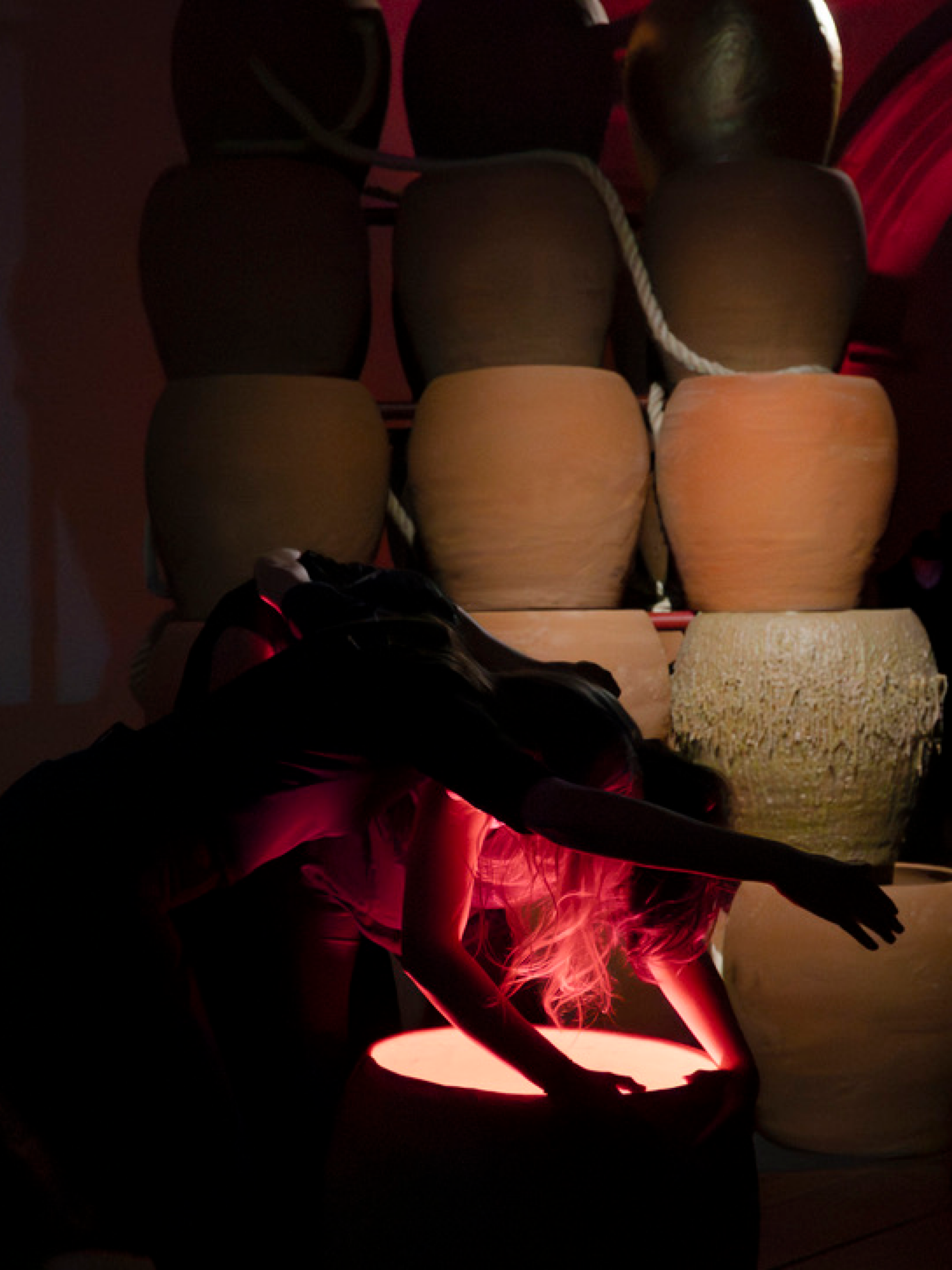
A collective research project between Ana Hernández, Bárbara Foulkes, Carlos Edelmiro, and Lorena Mal, which began in the context of the exhibition Ná’ Reza [Mano Rota] by Ana Hernández at Laboratorio Arte Alameda (2025), presenting a performance that explores the sounds of the clay comixcal, originating from the Isthmus of Tehuantepec region in Oaxaca, through different actions that amplify, resonate, and activate its memory of earth, erosion, and firing.
ERIKA LOANA (ATLAS MATERIA PRIMA)
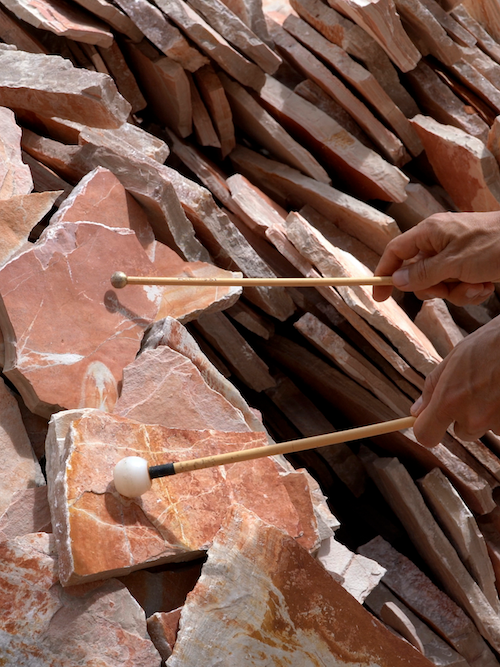
"The sound of stones clinking can be heard, following the rhythms of construction, stone upon stone, classification, cutting, and placement, defined by the movement of working bodies, mainly the hands. Someone bends down, lifts the stone onto their shoulder, and continues building the wall. This repetitive process of construction unconsciously links land and body with geological time and with the commons shared by those of us who inhabit these spaces." Fragment from the essay by Erika Loana “What Can We Learn from Rocks?”
Atlas Materia Prima is a research project founded by Erika Loana, created with the aim of making visible the impact of architecture on the Mexican landscape, specifically the impacts caused by extraction activities of raw materials used in the construction industry.
Its gatherings contribute to a collaborative atlas of the materials used in this industry, including their geographical location, as well as the recording and documentation of the transformations caused by extraction and construction processes. The goal is to better understand the impact of architecture on the Earth, as well as to explore alternatives that help establish the necessary limits between the spatial, the social, and the territory.
Listening Session Revolutions on the Surface of the Earth
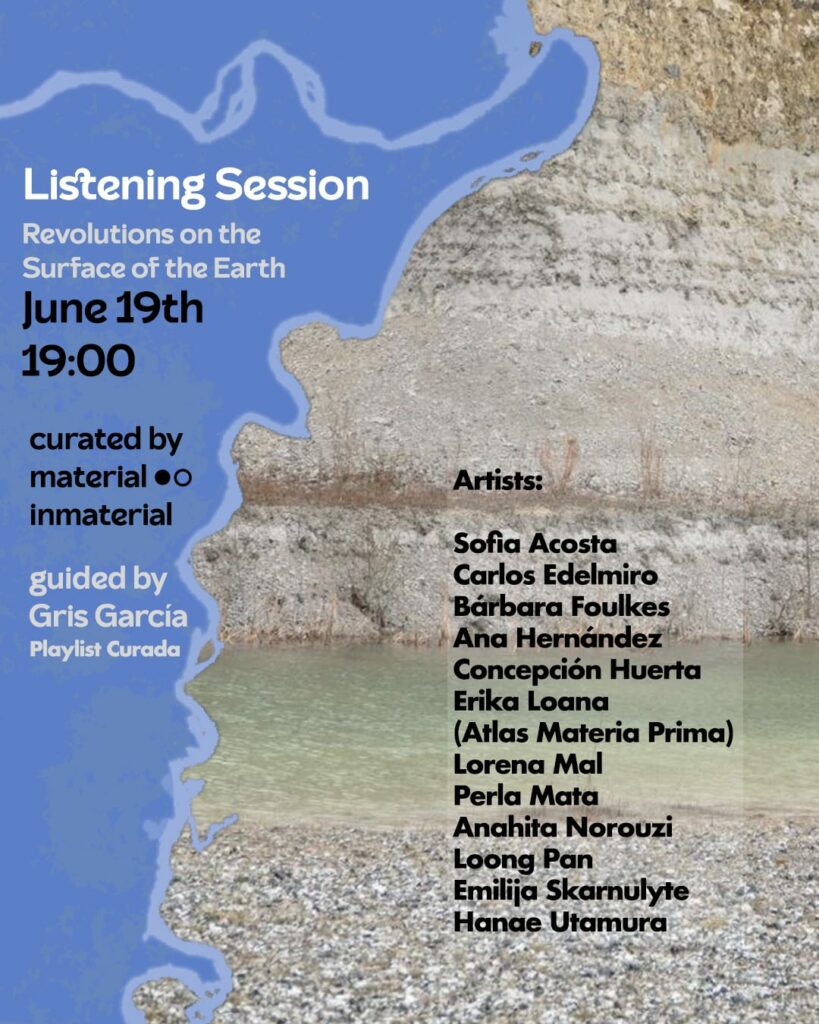
A collective listening session as part of the public program of the exhibition "What Leaves, Speaks"
Playlist Curada approaches listening as a way of engaging with territory, memory, and the Earth. This time Gris García will introduce more about the project “The sound of a mountain dying” curated by material ●○ inmaterial
June 19th at Mz Baltazar's Laboratory
Jägerstrasse 52-54, 1200 Vienna, Austria

LOONG PAN
Interdisciplinary contemporary artist whose practice runs parallel between field-based research and laboratory work. Her research focuses on bioremediation and biopolitics, aiming to reveal the hidden, overlooked, or deliberately erased environmental and existential relationships within contemporary industrial society, through the perspective of non-human organisms such as fungi and plants. Her work is not a simple ecological exposé; rather, it attempts to establish a multispecies, polyphonic contract of perception that restores space for long-excluded lives and relations to be heard, discussed, and responded to.
https://longpanstudio.com/
LORENA MAL
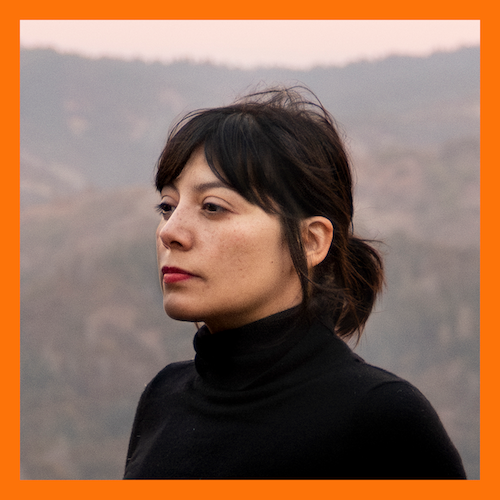
Interdisciplinary artist, lives and works between Mexico and the Netherlands. Her work connects visual arts, music and material history through installation, film, and sound performance. Her research integrates diverse methods of recording, archival and collaboration between communities, territories and disciplines, working with the dynamics of preservation, transformation and destruction that determine memory and Landscape.
https://www.lorenamal.com/
CARLOS EDELMIRO
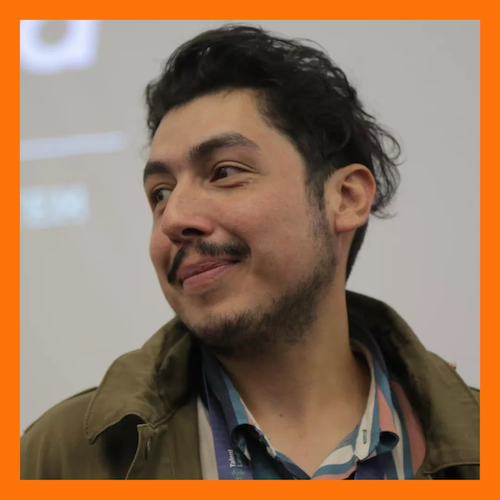
Mexican sound artist and writer. Possessed by an irremediable allergy to standards, his career has moved between contemporary art, advertising, and music. His passion for sound as a physical and cultural phenomenon has led him to explore the links between musical composition and production, as well as the history and philosophy of aural phenomena, engineering, and even politics. His studies include the Audio Engineer program at SAE Barcelona, the Master’s in Music and Audiovisual Media at the Catalonia College of Music, and the Master’s in Sound Art at the University of Barcelona. He is co-founder of such collectives as AjuaLab, Phonolab, Yutindudi, and Chintete, in which he explores the relationships between music, sound, and friendship.
http://www.sinewavelover.com/
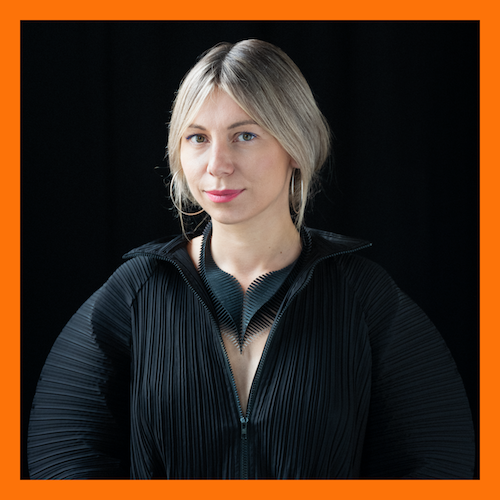
EMILIJA SKARNULYTE
Lithuanian-born artist and filmmaker. Working between documentary and imaginary realms, Škarnulytė makes films, installations, sculptures, drawings, and immersive time-based media that explore the entanglement of the human, the ecological, and the cosmic. Her work inhabits deep time, spanning geological epochs, submarine architectures, and post-anthropocentric futures to examine human and non-human histories. By combining poetic and analytic visual languages, Škarnulytė examines how infrastructures of power—military, ecological, and mythological—extend into unseen and unknowable territories of oceanic abyss, cosmic matter, and memory.
https://www.emilijaskarnulyte.com/
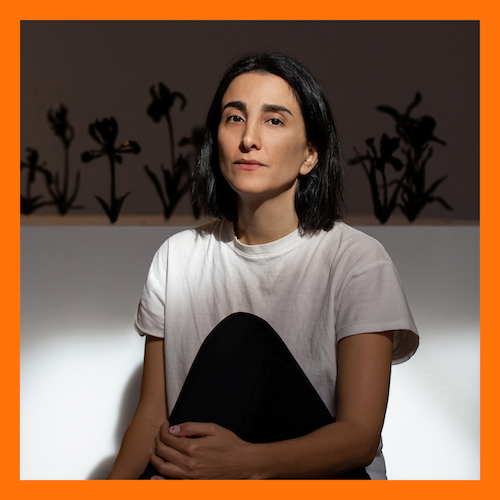
ANAHITA NOROUZI
Multidisciplinary artist, originally from Tehran and active in Montreal. Her practice is research-driven, informed by marginalized histories, focusing on themes of resource extraction, colonialism, and the relationship between humans and land. Articulated across a range of materials and mediums—video, sculpture, installation, photography—her work challenges institutional authority by reclaiming personal narratives and collective memories embedded in archives, museum collections, and herbarium pages, ultimately dissecting how power operates through systems of classification, representation, and historical erasure.
https://www.anahitanorouzi.com/about/
SOFÍA ACOSTA
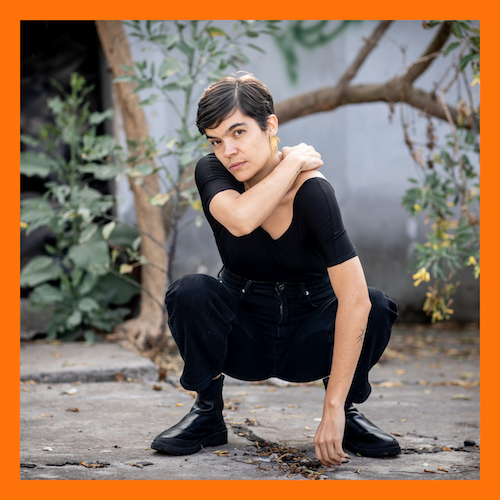
Visual artist, mother, and activist (an Ecuadorian based in Mexico City). Her practice is both an aesthetic and political commitment that questions dominant gender narratives while proposing sensitive approaches to post-extractivism and challenging contemporary notions of territory. Her work takes shape through an interdisciplinary practice that includes installations, independent publications, analog video, and interventions of photographs, archives, cartographies, and testimonies. Currently, together with Anamaría Garzón and Francisco Hurtado, she coordinates “Estado Fósil”, an editorial and multimedia research project that engages with the archive of more than 50 years of oil extraction in the Ecuadorian Amazon through diverse artistic approaches.
https://www.lasuerte.art/

CONCEPCIÓN HUERTA
Sound artist, audiovisual creator, and photographer. Her practice unfolds at the intersection of sound art, audiovisual media, and artistic research. She studied Audiovisual Media at the Centro de Arte Audiovisual (CAAV) in Guadalajara (2006–2010). She has been involved in initiatives such as Speculative Sound Forensics and has collaborated on artistic research projects such as Recounting, alongside Pamela Varela and Ella H. Her practice explores sound through its materiality, integrating synthesis, field recordings, foley, and both analog and digital processes to create speculative narratives that investigate the relationship between listening, space, and the body.
https://concepcionhuerta.bandcamp.com/
PERLA MATA
Mexican visual artist. Her practice explores the temporalities of metal and its industrial scale in relation to the processes of mining extraction and metallurgical transformation. She collects minerals and residual metals from her region of origin, using painting, installation, performance, and text to develop sensitive and critical approaches to territories and their materialities. She holds an MA in Visual Arts from the National Autonomous University of Mexico (UNAM) and is part of the SOMA Educational Program (2025–2027). Her work has been exhibited in Mexico, Germany, and the United States.
https://www.instagram.com/pmatachairez

HANAE UTAMURA
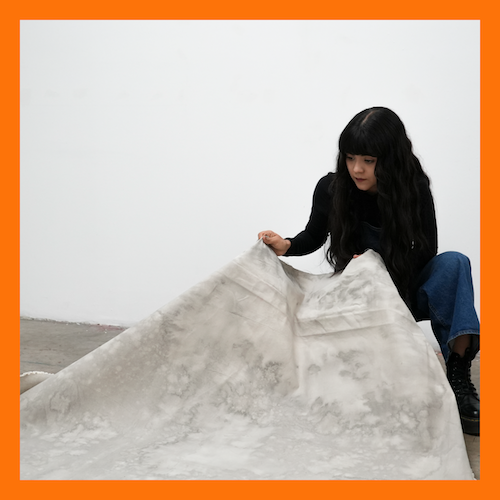
Japanese interdisciplinary artist and educator based in New York, Berlin and Tokyo. Utamura works in various media, including video, performance, installation and sculpture. Utamura's research centers around the questions on modernity, ecology and technology. Often working closely with specific sites, her project explores the cultural relationship to nature, focusing on how we imagine, experience, and affect the natural world. Negotiations between the human and the non-human, and how all the varieties of the wills of life manifest are the central focus of her practice. She has performed and exhibited extensively around the world, including the Queens Museum, the Brooklyn Museum, and the Asian Art Biennial at the National Taiwan Museum of Fine Arts. Her work has been supported by numerous residencies and fellowships including ISCP, Künstlerhaus Bethanien, the Japanese Ministry of Culture, and UNESCO, among others
https://www.hanaeutamura.com/
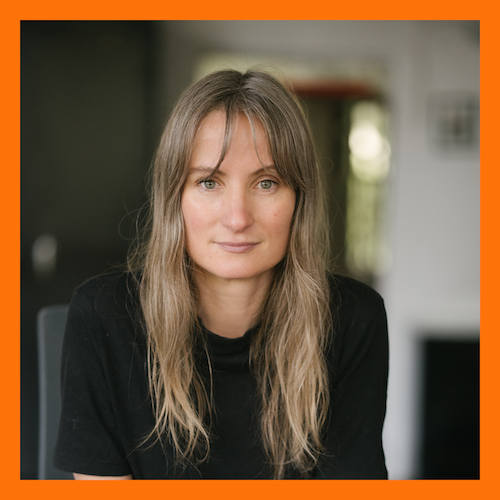
BARBARA FOULKES
Artist, choreographer and cultural manager. Since 2021, she has coordinated the Educational Area and the Public Program of the Diego Rivero Anahuacalli Museum. Her work is linked to interdisciplinarity, research and education art. She understands choreography as the relationships established between bodies and ideas, and translates this into a way of thinking and observing the world in terms of tensions, forces, counterweights, balances and imbalances: in terms of action, and, therefore, of life. Her performance work is ritualistic and weightless. She approaches drawing, writing and video as an extension of the ephemeral, a way of documenting action and turning it into sensitive study material.
https://barbarafoulkes.com/
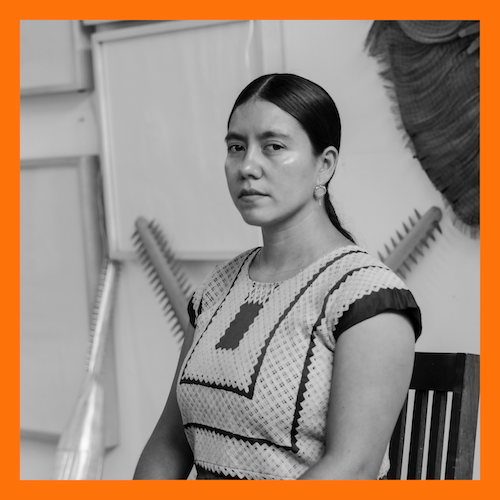
ANA HERNÁNDEZ
Mexican visual artist. She graduated from the
School of Fine Arts of Oaxaca and the Clínicas de Especialización en Arte Contemporáneo CEACO, and received part of her artistic training at the Institute of Graphic Arts of Oaxaca (IAGO). Her extensive body of work encompasses a wide range of techniques, from screen printing to wood carving, and incorporates the traditional sonic, textile, and visual languages of the Isthmus of Tehuantepec. Through her practice, the artist addresses themes such as migration, language, and family, drawing from personal interests that evolve into the exchange of knowledge within the community. Ana Hernández’s work represents a reaffirmation of art from Indigenous communities and its contemporary expressions.
https://www.instagram.com/hernandez.ana.hernandez
ERIKA LOANA (ATLAS MATERIA PRIMA)
Multidisciplinary architect working at the intersection of architecture, art, and cultural institutions. Her practice spans exhibition design, artistic production, and architectural research — with a focus on ruin, landscape, and territory as lenses to critically examine how architecture relates to its environment. Since 2020, she has been developing Atlas Materia Prima, a critical research project that documents and makes visible the extraction of raw materials used in the construction industry, questioning where architecture truly comes from.
https://atlasmateriaprima.net/